 Back


Buy Now Pay Later (BNPL) splits one purchase into a few fixed payments. A credit card gives you a revolving credit limit that charges interest if you don't pay in full.
With BNPL, you know the total cost before you buy and it never grows. With a credit card, unpaid balances keep adding interest month after month. In Pakistan, PostEx PayLater lets you pay in 3 over 60 days, with no credit card and no interest, on a Shariah-compliant model.
What is BNPL and what is a credit card?
Buy Now Pay Later (BNPL)
BNPL is a payment option at checkout. You get the product now and pay for it in a small number of fixed installments. With PostEx PayLater, that is 3 payments: today, in 30 days and in 60 days. It is tied to a single purchase, and the full cost is shown before you confirm.
Credit card
A credit card is a card from a bank with a monthly spending limit. You can use it anywhere, again and again. If you pay the full bill by the due date, you pay no markup. If you don't, the bank charges markup (interest) on the unpaid amount, plus possible late fees.
Why this matters in Pakistan
Most Pakistanis don't have a credit card. According to SBP data reported by Business Recorder, Pakistan had 66.7 million payment cards by December 2025, and only 5% were credit cards. Debit cards made up 87%. BNPL fills that gap, giving debit card holders and COD shoppers a way to pay in installments.
BNPL vs credit card: side-by-side comparison
| Feature | PostEx PayLater (BNPL) | Credit card |
|---|---|---|
| How it works | One purchase split into 3 payments | Revolving credit limit, monthly bill |
| Repayment period | 60 days (today, 30 days, 60 days) | Monthly; balance can roll over |
| Interest | None; fixed price with a disclosed fee | Markup on any unpaid balance |
| Can the cost grow? | No, the price is fixed at checkout | Yes, unpaid balances keep growing |
| Shariah-compliant | Yes (Murabaha model) | Most conventional cards are not |
| What you need | CNIC, age 18+, debit or credit card | Bank approval, income proof, credit history |
| Where you can use it | Partner online stores and eligible COD orders | Almost anywhere cards are accepted |
| Best for | Planned online purchases | Everyday spending, travel, emergencies |
5 key differences explained
1. Total cost
With BNPL, the price is fixed when you buy. A Rs. 15,000 order on PostEx PayLater is split into three equal parts, and any processing fee is shown upfront. With a credit card, if you pay only the minimum due, markup is added to the rest every month, so the same item can end up costing much more.
2. Interest and Shariah compliance
Conventional credit cards earn from interest, which is riba under Islamic finance. PostEx PayLater uses Murabaha: PostEx buys the product and sells it to you at a fixed, disclosed price, payable in instalments. No interest is charged, and the model is approved by PostEx's Shariah Advisor / Shariah Board.
3. Eligibility
Getting a credit card in Pakistan usually means income proof, bank paperwork and a credit history. PostEx PayLater needs a CNIC, age 18 or above and a debit or credit card for payments. Approval still depends on eligibility checks.
4. Spending control
A credit card's open limit makes overspending easy. BNPL is linked to one order at a time, with a clear end date. You always know exactly what you owe and when.
5. Flexibility
Credit cards win here. You can use them in shops, abroad and for bills. BNPL works on partner online stores and eligible COD orders, so it suits planned online purchases best.
Which one should you choose?
Choose based on how you shop and what matters most to you.
Choose BNPL (PostEx PayLater) if you:
- Don't have a credit card, or don't want one
- Want to avoid interest and prefer a Shariah-compliant option
- Shop online and want to spread a bigger purchase over 60 days
- Usually order with Cash on Delivery but want smaller payments
- Like knowing the exact total and end date upfront
Choose a credit card if you:
- Need to pay in physical shops, abroad or for monthly bills
- Always pay your full bill on time, so you avoid markup
- Want card rewards or travel benefits
Many shoppers use both: a card for everyday spending and BNPL for planned online purchases.
How to start with PostEx PayLater
PostEx PayLater is a Shariah-compliant BNPL service from PostEx, which serves more than 30,000 merchants across Pakistan. Getting started takes a few minutes:
- Download the app on iOS or Android.
- Sign up and verify with your CNIC.
- Add a payment method: a debit or credit card.
- Choose PostEx PayLater at checkout on a partner store, or convert an eligible COD order in the app.
- Pay in 3: one-third today, one-third in 30 days and the last third in 60 days.
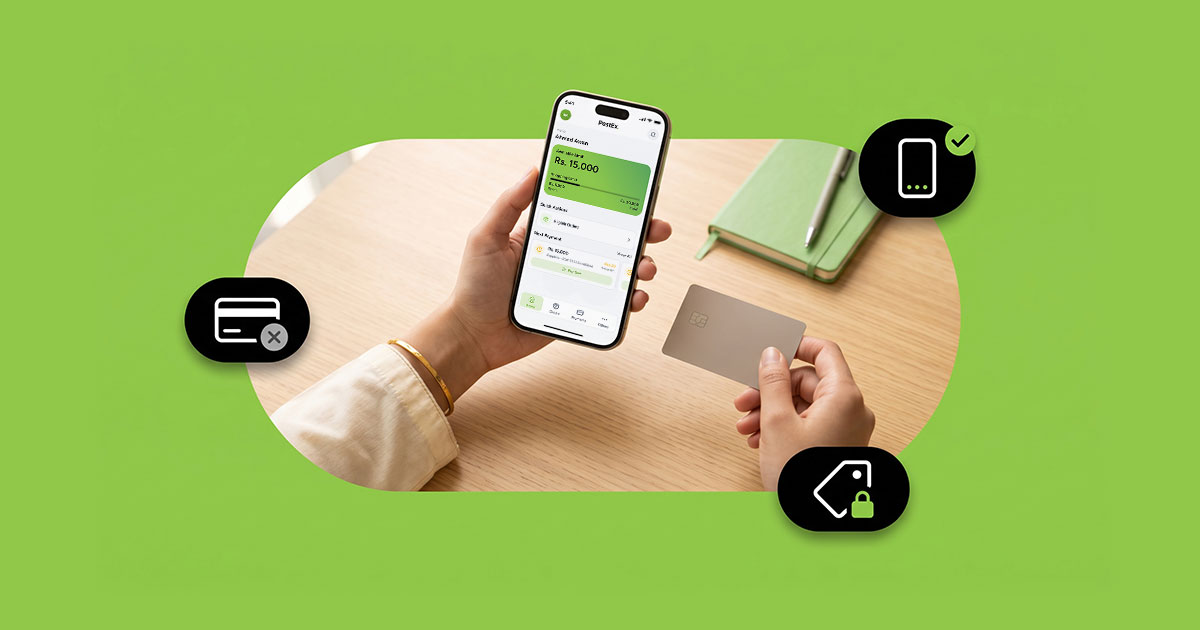
In the app, you can view eligible orders, track upcoming payments, manage payment methods and settle early whenever you want.
Frequently asked questions
What is the main difference between BNPL and a credit card?
BNPL splits one purchase into a few fixed payments with no interest. A credit card is a reusable credit limit that charges markup on any balance you don't pay in full.
Is BNPL better than a credit card?
For planned online purchases, BNPL is often simpler and cheaper because the cost is fixed and there is no interest. For everyday spending and travel, a credit card is more flexible.
Is BNPL halal while credit cards are not?
Conventional credit cards charge interest, which is not Shariah-compliant. PostEx PayLater uses a Murabaha (cost-plus sale) model approved by a Shariah Advisor / Shariah Board, so it is a halal option.
Can I use BNPL without a credit card in Pakistan?
Yes. PostEx PayLater does not require a credit card. You can pay your instalments with a debit card.
Does BNPL charge interest?
PostEx PayLater charges no interest. A processing fee may apply, and it is shown with the price before you confirm.
Does BNPL affect my credit history?
It can if you miss payments. Under PostEx PayLater's terms, overdue amounts may be reported to credit bureaus such as eCIB, DataCheck or Tasdeeq.
Can I pay off BNPL early?
Yes. You can settle your remaining PostEx PayLater payments early at any time through the app.
Who can use PostEx PayLater?
Anyone aged 18 or above with a valid CNIC and a debit or credit card, subject to eligibility checks.
The bottom line
Credit cards offer wide flexibility but can get expensive when balances carry over. BNPL keeps things simple: one purchase, a fixed price and a clear end date. For online shoppers in Pakistan who want to avoid interest or don't have a credit card, BNPL is the easier choice.
Try it on your next order. Download PostEx PayLater on iOS or Android and pay in 3 over 60 days. For eligibility, payment schedules and full terms, visit postexpaylater.pk.